

Kentucky Bourbon Distillery Interior Design Trends for 2026
At The Burkhart Company, we build spaces that tell a story: the story of grain and flame, of cooperage and barrel, and of the people who gather to taste what Kentucky makes best. As designers and craftsmen who have worked with distilleries and bourbon-focused hospitality spaces, we see distinct interior design trends taking shape for 2026.
These trends aren’t just pretty they’re strategic. They help distilleries increase tourism, boost retail and food-and-beverage revenue, and create memorable brand experiences that keep guests coming back. Below we outline the major design directions we’re seeing across Louisville and the Bluegrass and how we bring them to life.
Open, Transparent Production with Immersive Visitor Pathways
Distilleries increasingly design interiors so visitors can see the production process. Open-concept architecture where fermentation, mashing, and even small-batch stills are visible from tasting rooms and bars reinforces authenticity and education. Distilleries are treating the production floor as part of the visitor experience, not a hidden backroom. This transparency supports storytelling: guests literally walk through the brand’s craft. Rabbit Hole’s Louisville facility, for example, uses an open concept to make production part of the tour experience, and designers are emulating that approach across the region.
How we apply it: we design sight lines and casework that celebrate process equipment, while creating safe, attractive partitions and display elements that protect production workflows and maintain ADA-compliant circulation.
Hospitality-First Design: Bars, Restaurants, and Flexible Event Spaces
Distilleries are no longer only tasting rooms; they’re expanding into full hospitality experiences restaurants, casual cafes, rooftop bars, and private event spaces are on the rise. Buffalo Trace and others are adding dedicated dining and bar areas to keep visitors on-site longer and increase per-guest spend. Expect more integrated kitchens, cocktail bars, and merchandise boutiques connected seamlessly to tasting areas.
How we apply it: we design robust bar millwork, durable countertops, and flexible furniture footprints so spaces convert easily from daytime tours to evenings with live music or private events. Our commercial casework blends hospitality aesthetics with heavy-use durability.
Warm, Authentic Materials
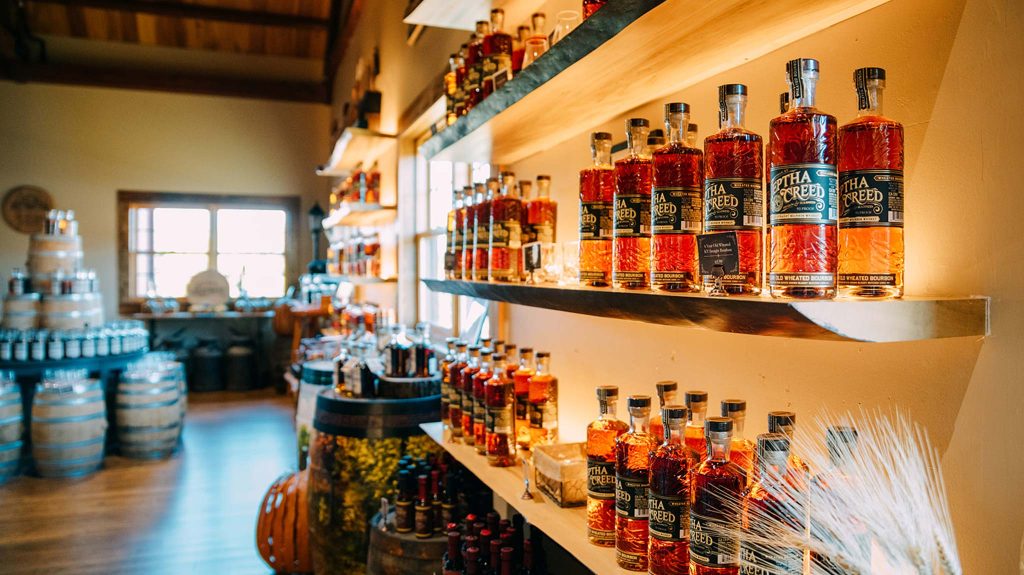
As a woodworking company, we love this trend: interiors are leaning into warm, honest materials. Reclaimed and sustainably sourced hardwoods, live-edge counters, exposed metal, and repurposed barrels are central. These materials echo the very processes of bourbon aging and cooperage, creating a tactile connection between product and place. Distilleries that emphasize handcrafted woodwork signal quality and local craftsmanship to guests. Our work with clients like Jeptha Creed shows how custom bar tops, display shelving, and stylized cabinetry become focal points in a visitor’s memory.
How we apply it: we specify hardwoods with proper finishes for hospitality traffic, design built-in shelving that highlights bottle displays, and craft live-edge and textured surfaces that photograph well for social media.
Adaptive Reuse & Historic Sensitivity in Louisville
Louisville’s bourbon story is built into its architecture. From historic warehouses to older brick industrial sites, many brands choose to renovate and adapt existing structures rather than build new. Respecting original materials brick, heavy timber, and old steel keeps the sense of place intact while adding modern amenities for safety and comfort. The blending of historic character with contemporary design is a signature Louisville approach.
How we apply it: we design custom millwork that fits irregular historic openings, create discreet modern interventions (lighting, signage, HVAC integration) that do not overpower original finishes, and use finishes that harmonize old and new.
Experiential Merchandising & Retail-Forward Design
Distillery retail spaces are becoming curated brand galleries. Rather than stacked shelves, retail areas feature storytelling displays, tasting stations, limited-release showcases, and interactive kiosks. Thoughtful lighting, casework, and display geometry encourage guests to linger and convert. The goal: make the bottle purchase feel like the natural final chapter of a great tour. Tourism and industry reports show new distilleries and visitor centers emerging across Kentucky, reinforcing how retail and experience design go hand-in-hand.
How we apply it: we create modular, secure display fixtures for limited releases, design integrated retail counters that double as tasting bars, and build hidden storage and staff work zones to keep behind-the-scenes operations efficient.
Brand-Driven Storytelling Through Spatial Design
Interior design is the best medium for experiential brand storytelling. From an entrance that evokes a cooper’s workshop to wayfinding that references aging rickhouses, design can narrate an origin story without a single word. Louisville projects increasingly collaborate with architecture and design firms to develop branded visitor journeys curated routes where each space reveals part of the narrative. Local projects that focus on blending educational content with design are gaining traction.
How we apply it: we work closely with brand and design teams to translate logos, label design, and distillery history into wood grain choices, carved details, embossed panels, and custom casework.
Sustainability, Local Sourcing, and Circular Design
Visitors and operators care more about sustainability. Designers are specifying locally milled wood, low-VOC finishes, and salvage-friendly practices often repurposing cooperage byproducts into furniture and fixtures. Sustainable choices not only reduce environmental impact but also create marketing touchpoints that resonate with modern consumers who want provenance with their pour.
How we apply it: we help distilleries choose durable, low-maintenance materials and recommend maintenance cycles, so pieces look great for years. We can also incorporate reclaimed cooperage and craft limited-edition furniture from retired barrels.
Flexible, Multi-Use Floors for Tours, Events, and Retail
Distilleries need spaces that adapt. A tasting room in the morning may become a ticketed class space in the afternoon, then a private event venue at night. Flooring, lighting, AV, and millwork must support multiple uses without requiring heavy reconfiguration. Designers now plan for easy transitions: roll-away furniture, integrated power within casework, and subtle storage niches.
How we apply it: we specify durable flooring transitions, design built-ins that hide/separate functions, and deliver custom furniture that stacks or nests for quick turnover.
Lighting That Shows, Not Hides
Great lighting reveals color the amber of bourbon, the grain of wood, the sheen of copper stills. Designers balance natural daylight in tour areas with carefully curated accent lighting in tasting and retail zones. Backlit shelving for bottles, adjustable track for exhibits, and warm temperature fixtures all contribute to memorable moments and better product photography for social media.
How we apply it: our millwork includes integrated lighting channels and wiring chases so lighting upgrades or fixture swaps are simple and code-compliant.
Safety, Code, and Operations
Design must meet code and protect operations: separation between production and public spaces, proper egress, accessible tasting counters, and hygienic finishes near food prep areas. The best designs are beautiful and buildable honoring craft while making daily operations smooth and safe.
How we apply it: we partner early with architects and contractors to ensure our casework meets life-safety needs and integrates with mechanical, electrical, and plumbing systems.
Why These Trends Matter for Distilleries and for Us
The bourbon boom that built decades of tourism has matured into an era where visitor experience, hospitality revenue, and brand storytelling matter as much as production. Recent industry moves like investments in visitor amenities and new visitor centers show distilleries are doubling down on experience as a business strategy.
At The Burkhart Company, our approach is simple: marry durable, beautiful craftsmanship with brand strategy and operational reality. We’ve built custom bar tops, casework, counters, and hospitality pieces for distilleries and bourbon-focused hospitality projects. We design to amplify the bourbon story while delivering the long-term performance clients require.
A Short Checklist for Distillery Interior Projects in 2026
- Prioritize sight-lines to production without compromising safety.
- Design hospitality spaces that can flex between tours, dining, and events.
- Put custom woodwork up front: bars, shelving, and display casework that tell your brand story.
- Use locally sourced materials and reclaimed cooperage where possible.
- Build retail to be experiential think displays, tasting bars, and storytelling vignettes.
- Integrate lighting and AV into millwork for better guest photos and presentations.
From Our Shop to Your Barrel House
Kentucky bourbon design in 2026 blends the hard truth of production with the softer art of hospitality. Guests want to learn, taste, linger, and take home a piece of the story. That’s where interior design becomes a revenue driver and a memory maker. If you’re planning an expansion, a new visitor center, or a bar refresh, we’d love to help you translate your brand into crafted spaces that last.
Contact us at The Burkhart Company to talk about custom casework, hospitality millwork, and distillery-ready design solutions. We bring craftsmanship, project management, and a deep respect for Kentucky’s bourbon heritage to every project we build.
