
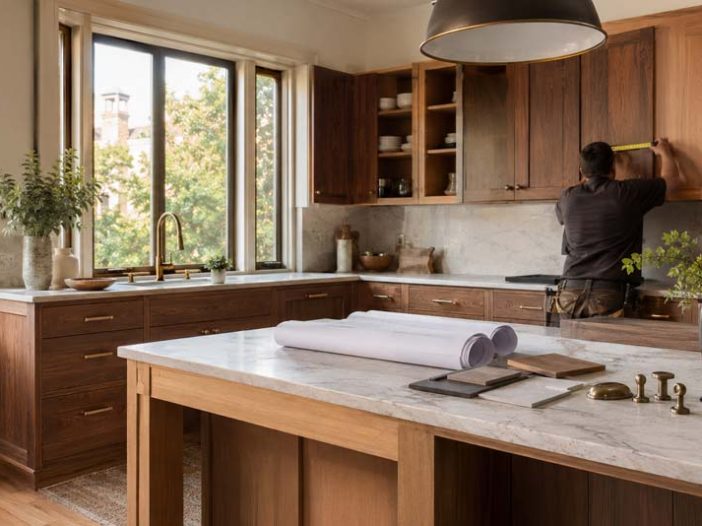
Planning a Kitchen Remodel Before the Holidays? A Louisville Custom Cabinet Timeline

The holidays have a way of making homeowners look at their kitchens differently. Maybe you need more storage before hosting Thanksgiving, a larger island for family gatherings, or a layout that keeps guests from crowding the cooking area.
If you want to improve your kitchen before the holiday season, August is an important planning month. However, a custom kitchen involves much more than installing cabinets. Measurements, design decisions, material selections, fabrication, finishing, site preparation, and installation must happen in the right order.
Starting early gives you more time to make thoughtful choices and manage unexpected issues. It does not guarantee a specific completion date, especially for a large renovation, but it puts your project in a much better position.
How Long Does a Kitchen Remodel Take?
A kitchen remodel can take several weeks or several months, depending on its scope. Replacing cabinetry within the existing layout is usually more straightforward than removing walls, relocating plumbing, changing electrical service, or installing new flooring.
At Burkhart Company, our cabinetry process includes consultation, design, approvals, production, finishing, quality control, and installation. Our design process generally takes one to two weeks, while custom cabinetry projects are commonly ready approximately eight weeks after the design is approved. Additional revisions, complex details, material availability, and the current production schedule can affect that estimate.
Cabinet installation may require anywhere from one day to two weeks, depending on the size and complexity of the project. You can explore our complete custom cabinetry process to see how a project moves from its initial idea to final installation.
A Practical Pre-Holiday Kitchen Timeline
1. August: Establish Your Project Scope
Begin by deciding what you actually want to change. Are you replacing cabinets while keeping the same footprint, or are you planning a full renovation involving walls, floors, lighting, plumbing, and appliances?
Make a list of your priorities. Consider storage problems, traffic flow, countertop space, seating, appliance placement, and how you use the kitchen when entertaining. Inspiration photos are helpful, but information about how your current kitchen succeeds or fails is even more valuable.
This is also the time to establish a working budget. If you are unsure whether fully custom or semi-custom cabinetry fits your project, budget, and schedule, a professional consultation can help you compare the options.
2. Schedule Your Consultation and Site Measurements
The next step is meeting with a cabinetry professional to discuss your goals. During Burkhart’s initial consultation, we review your ideas, study the space, take measurements, and begin developing an initial project price.
Accurate measurements are especially important in Louisville’s older homes. Walls may not be perfectly square, floors can slope, and previous renovations may have created unusual dimensions. Custom cabinets can be designed around these conditions, but they must be identified early.
If you are changing the room’s structure or mechanical systems, consult a qualified remodeler or contractor. Louisville Metro states that a building permit may be required when remodeling or altering a building. Electrical and plumbing work may also require separate permits and licensed professionals.
3. Finalize the Design and Major Selections
During design, your measurements and ideas become architectural drawings and renderings. This is when you review the layout and make decisions about cabinet construction, door profiles, finishes, storage accessories, hardware, and decorative details.
Burkhart generally provides the first version of its drawings in approximately two weeks. Each additional revision can add about a week, so organized feedback helps keep the project moving.
Appliances should also be selected early. Cabinet dimensions may depend on the exact refrigerator, range, hood, microwave, or dishwasher model. Changing an appliance after the cabinetry is engineered can create costly complications. Homeowners comparing efficiency and operating costs can use the federal ENERGY STAR Product Finder during the selection process.
Explore Burkhart’s custom kitchen and bath cabinetry to learn about available cabinet styles, construction, materials, and finishes.
4. Approve the Plans and Enter Production
Once you approve the drawings, materials, finishes, and final price, your project can enter the production queue. This is a significant milestone because custom cabinetry is made specifically for your kitchen rather than pulled from warehouse inventory.
At this point, Burkhart engineers the cabinets for production, orders the required materials, and provides an estimated installation date based on the current shop schedule.
Avoid making late changes after approval. Moving an appliance, changing a finish, or adding cabinetry may require revised drawings, new materials, and additional production time.
5. Prepare the Kitchen for Installation
While the cabinets are being built, coordinate the other parts of the renovation. Depending on your project, this could include demolition, framing, plumbing, electrical work, drywall, painting, or flooring.
The work must be scheduled in the correct sequence. Cabinets should not arrive while the room is still waiting for structural work or unfinished utilities.
Renovation can also create dust and indoor pollutants. The EPA recommends isolating work areas and using ventilation to help protect indoor air quality during remodeling.
6. Installation, Countertops, and Final Details
After construction, finishing, hardware installation, and quality-control reviews, the cabinets are delivered and installed. Countertop templates are commonly created after base cabinets are securely in place, so countertop fabrication may add time before the kitchen is fully operational.
Plumbing connections, appliances, backsplashes, lighting, hardware adjustments, and touch-ups follow. Build some flexibility into your holiday plans rather than scheduling a major gathering immediately after the projected completion date.

Should You Begin a Holiday Kitchen Remodel in August?
Yes—August is a smart time to begin the conversation, particularly if your project focuses mainly on cabinetry and keeps the existing layout. A whole-room renovation may need a longer schedule.
The most reliable way to understand your timeline is to define the scope, complete professional measurements, and confirm current production availability. If you are considering a kitchen remodel in Louisville or Southern Indiana, start a conversation with Burkhart Company as early as possible.
Frequently Asked Questions
Can custom cabinets be completed before Thanksgiving if I start in August?
Possibly, but completion depends on design revisions, material availability, project complexity, production capacity, and site readiness. Starting in August provides a stronger planning window, but homeowners should confirm the current schedule before making holiday plans.
What decisions can delay a kitchen cabinet project?
Common delays include repeated design revisions, late appliance selections, changing finishes after approval, unavailable materials, and unfinished electrical, plumbing, flooring, or drywall work. Making coordinated decisions early helps prevent one part of the project from delaying everything else.
When should I order kitchen appliances?
Choose exact appliance models before the cabinetry is engineered and approved. Manufacturers’ specifications help determine cabinet openings, clearances, ventilation requirements, and utility locations. Avoid changing models later unless your project manager confirms the replacement will fit the approved design.
Is semi-custom cabinetry faster than fully custom cabinetry?
It can be. Burkhart’s semi-custom cabinets are generally delivered to its shop within two to four weeks after drawing approval. Installation timing still depends on product availability, the project schedule, and whether the kitchen is ready for cabinetry.
