
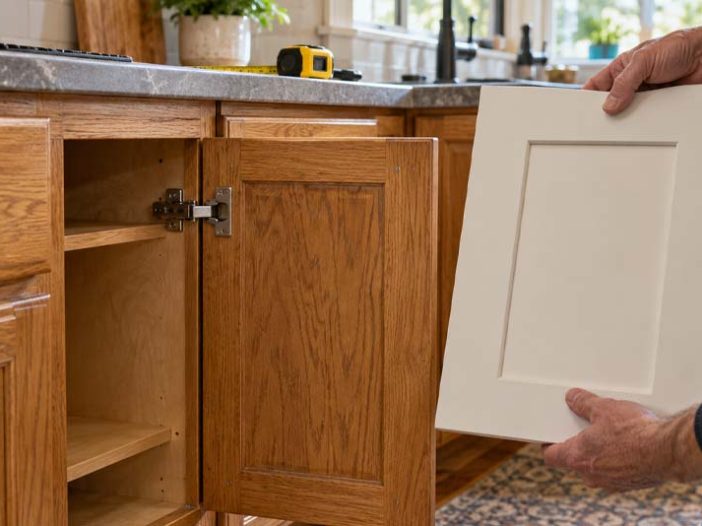
Cabinet Refacing vs. Replacement: Which Makes Sense for Your Louisville Kitchen?
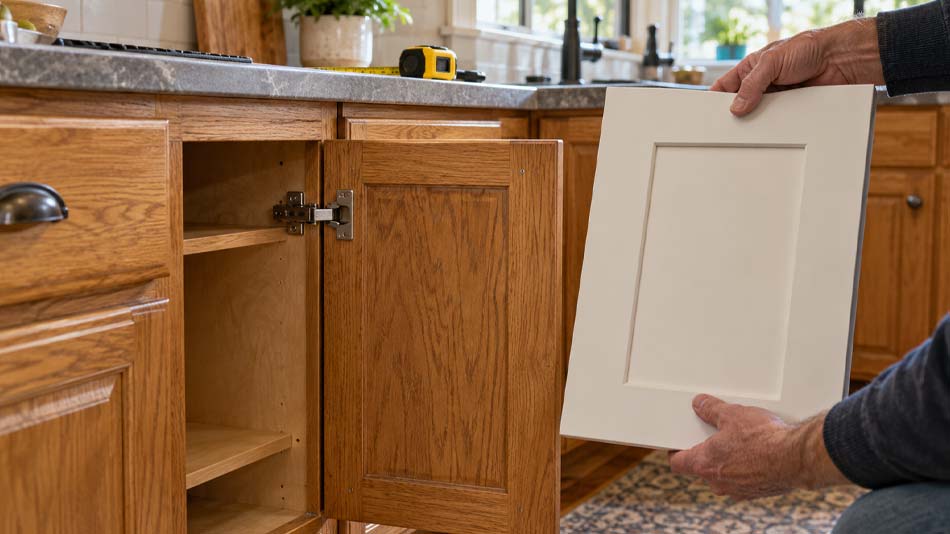
The cabinet doors look tired, but that may not be the part of your kitchen that needs the most attention. Perhaps the finish is worn around the handles. Perhaps you are also tired of kneeling to find a saucepan or moving three things every time you need the mixer.
Those are different problems, and they deserve different solutions.
Cabinet refacing can make sense when the existing cabinet boxes are sound and the layout works. Replacement deserves a closer look when the cabinets are damaged, storage falls short, or you want to change how the room functions. For Louisville homeowners, the best choice starts with looking beyond the door style.
What cabinet refacing actually changes
Refacing typically keeps the existing cabinet boxes while replacing doors and drawer fronts. Exposed frames and cabinet ends receive a coordinating veneer or finish. Hinges, pulls, and other hardware may also be included, depending on the proposal.
It is different from refinishing, which updates the finish on existing surfaces rather than replacing the fronts. This Old House explains the cabinet refacing process in more detail.
The important limitation is inside the cabinet. Unless additional modifications are specified, you retain the same box dimensions and basic layout. A narrow drawer stays narrow. A poorly placed cabinet stays poorly placed.
When keeping your existing cabinets makes sense
Start with their condition. Open the doors, look beneath the sink, and check the shelves, drawer boxes, and cabinet bottoms. Sound cabinets should provide a stable foundation for whatever updates you are considering.
Then think about a normal weekday. Can you unload the dishwasher without constantly crossing the room? Are dishes and cookware easy to reach? Does the kitchen have enough usable storage?
If the answers are mostly yes and your frustration is appearance, refacing may be worth exploring. A good cabinet assessment can help distinguish ordinary wear from problems that make investing in the existing boxes less practical.
When replacement solves the bigger problem
New doors will not repair swollen cabinet bottoms or make a crowded kitchen easier to navigate. Replacement becomes more compelling when structural deterioration, awkward dimensions, or storage limitations are central to your concerns.
Consider a kitchen with deep base cabinets and few drawers. You might want wide drawers for cookware, upright storage for baking sheets, and a pantry sized around the food you actually buy. New cabinetry lets those decisions shape the design from the beginning.
In an older Louisville home, replacement also offers a chance to work around unusual wall lengths, window locations, and ceiling heights. Custom kitchen cabinetry can be designed for those dimensions rather than relying entirely on standard sizes.
You do not need to move every appliance to benefit. Keeping a generally useful footprint while changing individual cabinet configurations can still make daily tasks easier.
Compare the complete proposals
Refacing may cost less than replacement, but the difference depends on the existing cabinets and the work included. Avoid judging two projects by their headline prices alone.
Ask whether each proposal includes doors, drawer boxes, hardware, finished ends, installation, removal, and disposal. Clarify which interiors remain untouched and whether any repairs or storage accessories are included.
For replacement, ask how countertop removal, backsplash repairs, flooring, and plumbing connections will be handled. These related tasks can affect the total project even when the cabinetry quote looks straightforward. The Federal Trade Commission recommends getting written estimates and reviewing the scope before hiring a contractor.
Fully custom cabinetry is not the only replacement option. Burkhart’s semi-custom cabinet lines provide another route worth discussing when the available sizes and modifications suit your room and budget.
Use October to make a thoughtful plan
Holiday cooking often brings kitchen frustrations into focus. Before guests arrive, write down what slows you down: crowded drawers, inaccessible serving dishes, or appliances taking over the counter.
Bring that list, room photos, and a realistic budget to a consultation. Ask about current production schedules and installation requirements before committing to a holiday completion date.
At The Burkhart Company, we help homeowners explore custom and semi-custom cabinetry for their spaces. If replacement looks like the right direction, schedule a design consultation or call 502-587-1538. We can discuss the cabinet layout, materials, and storage that would make the most useful difference in your kitchen.
Frequently asked questions
Is cabinet refacing always cheaper than replacement?
No. It can be less expensive when the boxes are sound and the scope is primarily cosmetic. Repairs, premium doors, and hardware upgrades can narrow the difference. Compare complete written proposals for the same goals.
Can refacing add drawers or pull-out shelves?
Some existing cabinets can accommodate new drawer systems or pull-outs, but compatibility depends on their dimensions and construction. Ask for those modifications to be evaluated and priced separately; they are not automatically included in refacing.
Can I keep my countertops when replacing cabinets?
Sometimes, but successful removal and reuse depend on the countertop material, condition, installation, and new layout. Have the countertop and cabinetry professionals assess feasibility and explain the risk of damage before planning around reuse.
Should water-damaged cabinets be refaced?
Resolve the moisture source first and have the damage assessed. Swollen panels or compromised structural parts may require replacement. Covering damaged surfaces does not restore the underlying material or address an ongoing leak.
Do replacement cabinets have to be fully custom?
No. Semi-custom cabinets may work well when their sizes and available modifications fit your kitchen. Fully custom cabinetry offers more flexibility for unusual dimensions or specific storage needs. The choice depends on your room, priorities, and budget.
