

Planning a kitchen remodel can be exciting, but it’s easy to get swept up in every new style that comes along. While some looks stand the test of time, others fade fast and can leave your kitchen feeling outdated before you even break in your new appliances. To help you steer clear of expensive mistakes, here are the Top 5 Kitchen Trends to Avoid in 2025. By knowing which design ideas are on their way out, you can invest your budget in features that will stay fresh and functional for years to come.
1. Over-the-Top Lighting Schemes
Why Too Much Light Can Dim Your Design
Good lighting is crucial in a kitchen—for cooking, entertaining, and everyday tasks. But more fixtures don’t always equal better results. In 2025, kitchens clogged with an array of mismatched pendants, spotlights, and recessed cans are starting to look cluttered and chaotic.
- The Pendant Overload
Hanging three or more pendants above an island might seem dramatic, but it often overwhelms the space. Instead of acting as focal points, too many fixtures compete for attention and leave visual clutter. - Excessive Recessed Fixtures
Flooding your ceiling with downlights can create a harsh, clinical glow. Overuse of recessed cans also makes the ceiling look like Swiss cheese, drawing the eye upward to holes rather than down to your beautiful counters. - Builder-Grade Blunders
Generic, off-the-shelf fixtures may be inexpensive, but they tend to look dated within a few years. Their plastic shades and bland finishes rarely complement the personalized style homeowners crave.
What to Do Instead
- Choose Quality Over Quantity
Invest in two well-placed pendants or a single statement chandelier. A pair of pendants that match your kitchen’s scale and finish can highlight your island without overpowering it. - Layer Light Thoughtfully
Combine task lighting (under-cabinet strips or rail lights), ambient lighting (dimmable ceiling fixtures), and accent lighting (LED toe-kicks or in-cabinet up lights). This layered approach ensures each area is bright enough for its purpose without unnecessary fixtures. - Embrace Natural Daylight
Whenever possible, maximize windows, skylights, or solar tubes. Natural light is free, energy-efficient, and boosts mood. Position your work zones—sink, prep area, and stove—where they can benefit from the most daylight.
By paring down your lighting plan and focusing on quality fixtures plus natural light, you’ll avoid one of the Top 5 Kitchen Trends To Avoid and create a kitchen that feels bright, balanced, and inviting.
2. Overly Ornate or Ultra-Minimalist Cabinets
Why Cabinet Extremes Don’t Last
Cabinets form the backbone of your kitchen. They define the room’s style, storage capacity, and overall vibe. Yet, two cabinet trends—overly detailed millwork and handleless slab fronts—are both headed for the chopping block.
- Fussy Raised Panels
Cabinets with intricate moldings, rosettes, and scalloped trim scream “early 2000s.” These embellishments can look bulky, date your kitchen quickly, and collect dust in hard-to-reach crevices. - Handleless, Flat-Front Cabinets
At the other end of the spectrum, ultra-smooth, handle-free doors may feel sleek, but they often lack personality. Their push-to-open hardware can fail over time, and without visible pulls, everyday access becomes a struggle—especially with wet or greasy hands.
Smarter Cabinet Choices
- Timeless Shaker-Style Doors
A simple recessed panel with a clean frame strikes a perfect balance. Shaker cabinets adapt easily to classic, modern, or transitional kitchens and pair well with almost any countertop or backsplash. - Two-Tone Combinations
Instead of painting all cabinets one color, consider contrasting your island and perimeter units. A deep navy island with crisp white upper cabinets adds visual interest and won’t look tired in a few years. - Strategic Hardware
Choose durable pulls or knobs in finishes like brushed nickel, antique brass, or matte bronze. Even if your cabinet style is minimal, hardware adds a finishing touch that enhances functionality and style.
By avoiding overly ornate or completely handleless cabinets—two entries on our Top 5 Kitchen Trends To Avoid list—you’ll create a space that feels both current and enduring.
3. The Gray-Only Color Scheme
Why Gray Kitchens Are Losing Their Cool
Gray kitchens reigned supreme throughout the 2010s, with slate, charcoal, and dove gray dominating cabinets, counters, and tile. While gray remains a neutral powerhouse, relying on it exclusively can make your kitchen feel cold, flat, and uninspired.
- Monotony and Moodiness
Walls, cabinets, and even countertops all in shades of gray can sap warmth from the room. Without contrasting accents, the space may feel sterile—more like a lab than a lively gathering spot. - Limited Adaptability
Pure gray doesn’t pair well with every accent color or material. If you decide to switch up your décor—say, adding wood shelves or colorful rugs—you might find your gray backdrop clashes rather than complements.
Refreshing Alternatives
- Warm Neutrals
Swap cool grays for taupe, greige (a gray-beige hybrid), or soft mushroom hues. These shades bring subtle warmth while remaining versatile enough to coordinate with stainless steel, marble, or butcher block. - Accent Walls and Islands
If you love gray, keep it on the island or as a single accent wall. Surround it with white, cream, or a muted pastel to create a balanced, layered look. - Natural Material Pairings
Pair gray cabinets with warm wood elements—open shelving, a butcher-block countertop, or a reclaimed wood hood cover. The contrast between cool paint and organic wood instantly elevates the design.
Ditching the gray-only palette is key to avoiding one of the Top 5 Kitchen Trends To Avoid. By introducing warmer neutrals or selective gray accents, you’ll create a space that feels fresh, welcoming, and versatile.
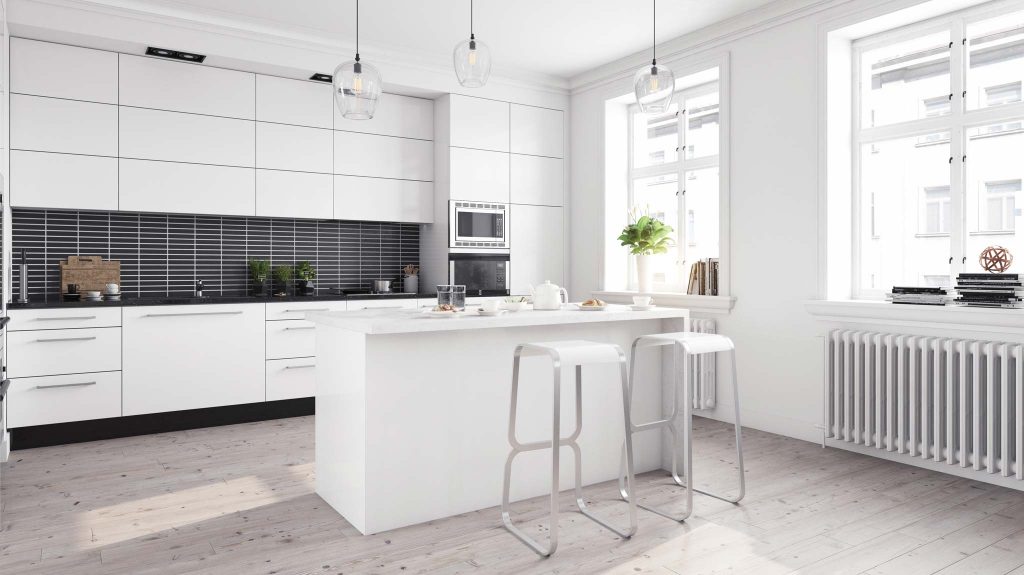
4. Monochrome White Overkill
When All-White Becomes Too Bland
White kitchens are classic for a reason: they look clean, bright, and timeless. However, an all-white approach—white cabinets, white counters, white floors, and white backsplash—can sometimes backfire. Without variation, your kitchen may read as bland, sterile, or even cheap.
- Lack of Depth
When every surface is the same bright white, there’s nothing to catch the eye. The space can feel one-dimensional, lacking the contrast and texture that bring a room to life. - Maintenance Headaches
While white hides small scratches well, it shows spills, smudges, and dust more readily. Constant cleaning can become a chore, and over time white surfaces may yellow or stain.
Ways to Elevate White Kitchens
- Introduce Texture
Choose a subway tile with a hand-glazed finish or a honed marble slab with soft veins. Textured cabinet doors—such as beaded inset or flat panels with subtle grooves—add visual interest without straying from white. - Add Contrast
Incorporate darker elements: a charcoal island, black hardware, or a deep wood range hood. Even small pops of color—like sage-green stools or navy accessories—can break up the whiteness and give the room personality. - Play with Materials
Pair white upper cabinets with a butcher-block countertop or a marble-topped island. A slate tile floor underfoot can ground the space and hide dirt, while white walls keep things bright.
By avoiding an extreme all-white scheme—another item on our Top 5 Kitchen Trends To Avoid—and layering in texture, contrast, and mixed materials, you’ll maintain that clean, airy feel without sacrificing warmth or character.
5. Outdated or Overly Industrial Hardware
Why Kitchen Jewelry Matters
Cabinet knobs, drawer pulls, faucet finishes, and light switch plates may seem like small details, but they have a big impact on your kitchen’s overall look. In 2025, certain hardware choices are starting to feel tired or out of place.
- Matte Black Saturation
Matte black was once the must-have finish for faucets, cabinet pulls, and lighting fixtures. Now, it’s become so ubiquitous that it risks looking like a showroom cliché rather than a thoughtful design choice. - Harsh Industrial Styles
Factory-style hardware—thick pipes as towel bars, metal mesh-front cabinets, and exposed nuts and bolts—can overwhelm a kitchen’s softer elements. Unless your home has a genuine loft or warehouse vibe, heavy industrial pieces often clash with more refined furnishings. - Ultra-High Shine
Polished chrome and high-gloss brass can look flashy, but they show fingerprints and water spots easily. They also date more quickly than subtler, low-luster finishes.
Hardware Upgrades for 2025
- Warm Metallics
Brushed gold, satin brass, and antique bronze offer a gentle glow without glare. These finishes coordinate beautifully with warm neutrals, wood accents, and mixed-material designs. - Mixed-Metal Harmony
Don’t feel locked into one finish throughout your kitchen. Combine brushed brass pulls on cabinets with matte black faucets, or pair pewter knobs with satin nickel lighting. Just keep the finish sheens consistent for a cohesive look. - Organic Shapes
Opt for hardware with soft, rounded edges or subtle curves. T-bar pulls in a gently curved profile or knobs with a slightly domed face feel modern yet timeless.
By steering clear of overused matte black, harsh industrial fixtures, and overly shiny finishes—our final tip on the Top 5 Kitchen Trends To Avoid—you can select hardware that elevates your design and stands up to daily use.
Conclusion
A successful kitchen remodel balances style, function, and longevity. By steering clear of these Top 5 Kitchen Trends To Avoid—overdone lighting, extreme cabinet styles, gray monotony, all-white overload, and outdated hardware—you’ll make smart investments that keep your space feeling fresh for years to come. Focus on quality fixtures, timeless cabinet designs, warm neutrals, layered textures, and thoughtful hardware choices. With these guidelines, your 2025 kitchen will look current without falling prey to fleeting fads.
Ready to plan your dream kitchen? Use this advice to guide your selections, and work with a trusted designer or contractor to bring your vision to life. Your future self—and your resale value—will thank you!
