

Custom vs. Semi-Custom Cabinets: Which Is Right for Your Louisville Home?
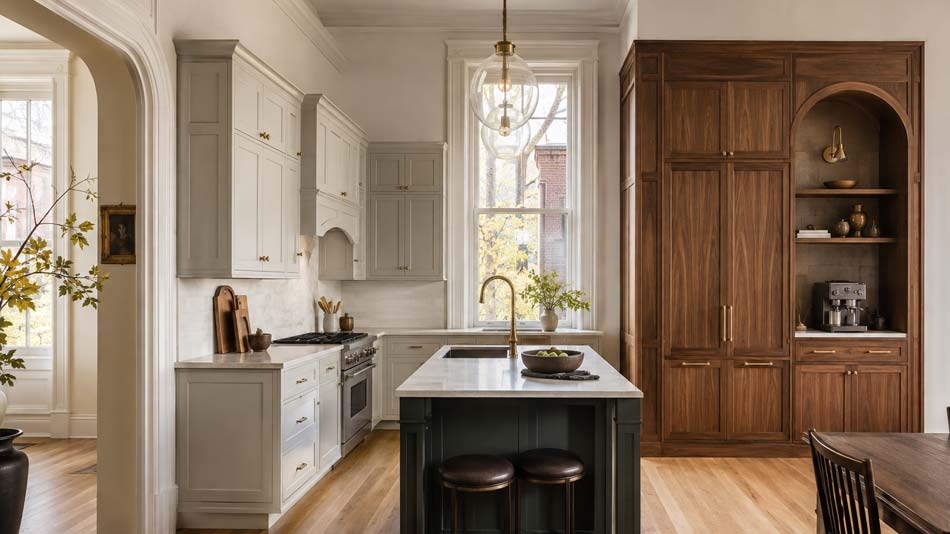
Choosing new cabinets involves more than selecting a door style or paint color. One of the most important decisions is whether to invest in fully custom cabinets or choose a semi-custom line.
Both can provide attractive, durable cabinetry. The right choice depends on your room, design goals, storage needs, timeline, and budget. For Louisville homeowners, the differences become especially important when remodeling an older home, working around unusual dimensions, or trying to achieve a very specific look.
Here is how custom and semi-custom cabinets compare—and how to decide which option fits your project.
What Are Custom Cabinets?
Custom cabinets are designed and built specifically for your room. The cabinet dimensions, materials, finishes, door styles, storage features, and architectural details can all be adapted to your space.
This flexibility makes custom cabinetry particularly useful when a home has:
- Uneven walls or floors
- Unusual corners or ceiling heights
- Nonstandard appliances
- Limited available space
- Existing trim or woodwork that should be matched
- A highly specific architectural style
Custom cabinetry also allows storage to be designed around the homeowner. Deep cookware drawers, hidden charging stations, appliance garages, specialty pantry storage, integrated lighting, and furniture-style details can be incorporated from the beginning.
Rather than making the room accommodate predetermined cabinet sizes, the cabinetry is built around the room.
What Are Semi-Custom Cabinets?
Semi-custom cabinets begin with an established collection of cabinet sizes, door styles, finishes, and accessories. Homeowners can personalize the design within the options offered by that particular cabinet line.
Although semi-custom cabinetry does not provide unlimited flexibility, it offers considerably more choice than basic stock cabinets. Depending on the collection, available features may include plywood construction, dovetail drawers, soft-close hardware, adjustable shelves, finish options, and selected cabinet modifications.
Semi-custom cabinets are often a practical solution when the room has a fairly straightforward layout and the homeowner wants quality cabinetry while working within a more defined budget.
The Main Differences Between Custom and Semi-Custom Cabinets
Understanding the basic differences can make the decision easier.
Cabinet Sizing
Custom cabinets are built to the dimensions of the room. This allows the cabinetry to fit unusual walls, corners, ceiling heights, and appliance configurations.
Semi-custom cabinets are available in established size increments. Modifications may be possible, but the design generally must work within the sizes offered by the cabinet line.
Design Flexibility
Custom cabinetry provides nearly unlimited flexibility. Homeowners can personalize dimensions, door styles, materials, finishes, storage features, moldings, and architectural details.
Semi-custom cabinetry offers a curated collection of choices. There may still be many door styles, finishes, hardware options, and storage accessories available, but selections are limited to what the manufacturer offers.
Project Investment
Fully custom cabinetry generally requires a larger investment because each project is designed, engineered, built, and finished for a specific space.
Semi-custom cabinetry is often more budget-conscious because it uses established cabinet sizes and production methods. This can leave additional room in the budget for countertops, appliances, flooring, lighting, or other improvements.
Production Schedule
Custom cabinets typically require more time for design, drawings, approvals, production, finishing, and quality control.
Semi-custom cabinets can often be delivered sooner because the cabinet line already has established dimensions, materials, and construction specifications. Actual schedules will depend on product availability and the readiness of the remodeling project.
Best Uses
Custom cabinets are especially useful for unusual rooms, older homes, distinctive designs, specialized storage, and projects where maximizing every inch matters.
Semi-custom cabinets work well in conventional layouts where homeowners want durable construction, attractive design choices, and greater budget predictability.
When Custom Cabinets Make the Most Sense
Custom cabinets may be the better investment when a project requires a solution that standard cabinet sizes cannot provide.
You Are Remodeling an Older Louisville Home
Homes in areas such as the Highlands, Crescent Hill, Old Louisville, and St. Matthews can have distinctive architecture—but they may also have uneven walls, irregular dimensions, and original details worth preserving.
Custom cabinetry can be precisely fitted to these conditions. Trim profiles, wood species, colors, and proportions can also be selected to complement the home rather than making the new cabinetry feel disconnected from its surroundings.
You Want to Maximize Every Inch
Small kitchens and unusual layouts can lose valuable storage when cabinets are only available in fixed widths. Custom construction can turn narrow gaps, deep corners, tall ceilings, and awkward recesses into usable storage.
This can be particularly valuable when expanding the room is impractical or when the existing footprint must remain unchanged.
You Have a Specific Design in Mind
Custom cabinetry provides greater control over details such as inset doors, frameless construction, custom paint colors, wood selection, decorative panels, integrated lighting, and furniture-style elements.
If inspiration photos contain features that are unavailable through established cabinet collections, a custom approach may be necessary to create the desired look.

When Semi-Custom Cabinets May Be the Better Choice
Semi-custom cabinetry can deliver excellent results without requiring every cabinet to be individually developed.
Your Layout Is Fairly Conventional
If the kitchen or bathroom works well with standard cabinet dimensions, semi-custom cabinets may fit the room with relatively few compromises. Strategic fillers, panels, molding, and selected modifications can help create a more finished appearance.
You Want to Balance Quality and Budget
Semi-custom lines allow homeowners to prioritize durable construction and useful features while choosing from a curated selection of styles and finishes. This can preserve room in the budget for other parts of the renovation.
You Prefer a More Streamlined Selection Process
Unlimited choices can be exciting, but they can also make decisions more complicated. A curated cabinet collection narrows the options while still providing enough flexibility to create a personalized kitchen, bathroom, office, or built-in storage area.
Look Beyond the Cabinet Label
“Custom” and “semi-custom” describe the level of flexibility, but those labels do not automatically determine quality. Homeowners should also compare:
- Cabinet box and shelf construction
- Drawer materials and joinery
- Hinges and drawer slides
- Finish quality and durability
- Available modifications
- Installation experience
- Warranty coverage
The Kitchen Cabinet Manufacturers Association explains how cabinet performance can be evaluated through structural, drawer, door, and finish testing. The National Kitchen & Bath Association’s planning guidelines also emphasize the importance of clearances, storage systems, accessibility, and the overall interior environment.
A well-designed cabinet project should consider how the entire room functions—not merely how the doors look in a sample.
Can You Combine Custom and Semi-Custom Cabinetry?
In some projects, yes. Semi-custom cabinets might handle the main kitchen layout while custom cabinetry is used for a difficult corner, distinctive island, built-in hutch, bar, or adjoining living area.
Whether this approach makes sense depends on finish compatibility, construction details, project scope, and the desired level of visual consistency. It should be evaluated during the design process rather than assumed at the beginning.
Compare Both Options Before Deciding
The best cabinet choice is not necessarily the most expensive option or the one with the fastest delivery. It is the option that fits the room, supports daily routines, reflects the homeowner’s style, and respects the overall project budget.
Burkhart Company offers both fully custom and semi-custom cabinetry, allowing Louisville homeowners to compare the possibilities with one experienced team. During Burkhart’s design process, the space is measured, project goals are discussed, and drawings and material selections are developed before production begins.
If you are considering new cabinetry, start a conversation with Burkhart Company to explore which approach makes the most sense for your home.
Frequently Asked Questions
Are semi-custom cabinets lower quality than custom cabinets?
Not necessarily. Quality depends on cabinet construction, materials, hardware, finishes, installation, and the specific product line. Semi-custom cabinets can provide durable construction and premium features. The primary difference is that fully custom cabinetry offers greater freedom in dimensions, materials, finishes, and specialized details.
Are custom cabinets worth it in an older Louisville home?
Custom cabinets can be especially valuable in older homes with uneven walls, unusual dimensions, tall ceilings, or architectural details that should be preserved. Building cabinetry for the actual room can reduce wasted space and produce a finished design that complements the home’s existing character.
How long do custom and semi-custom cabinets take?
Project schedules depend on design complexity, material availability, production demand, site readiness, and installation requirements. Semi-custom cabinets are generally produced faster because they use established sizes and specifications. Fully custom cabinetry typically requires additional time for drawings, engineering, fabrication, finishing, and quality control.
Should I choose cabinets before selecting appliances?
Major appliance models should generally be selected before cabinet drawings are finalized. Refrigerator depths, range dimensions, ventilation requirements, door swings, and appliance clearances can affect the cabinet layout. Coordinating these decisions early helps prevent spacing conflicts and costly changes later in the project.
